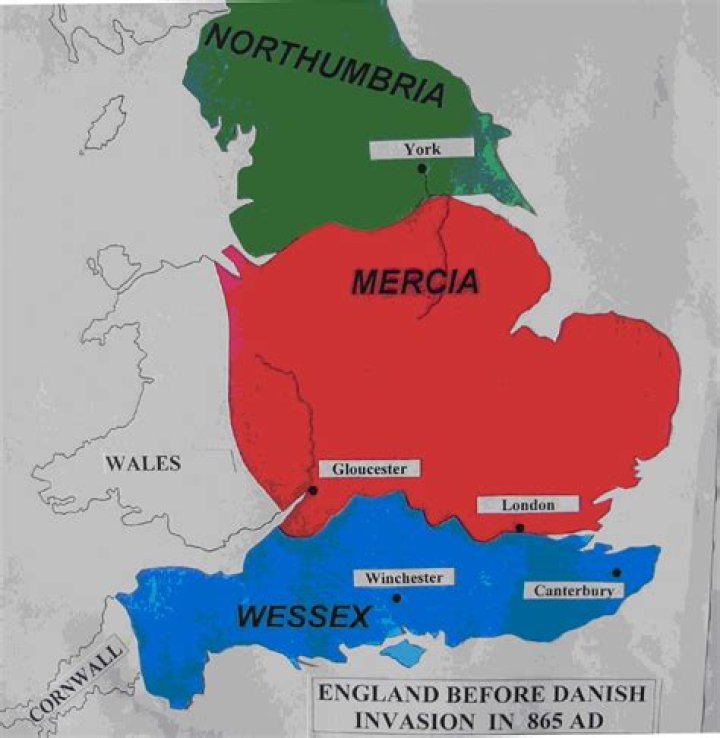
The Kingdom of Wessex had thus been transformed into the Kingdom of England.
What is the kingdom of Wessex called now?
Wessex, one of the kingdoms of Anglo-Saxon England, whose ruling dynasty eventually became kings of the whole country. In its permanent nucleus, its land approximated that of the modern counties of Hampshire, Dorset, Wiltshire, and Somerset.Is there still a Wessex?
"Wessex" has not had any official existence since that time, but it has remained a familiar term since Thomas Hardy revived it for his West Country novels and poetry. Today some wish to see it restored as a region of England.What did Wessex become?
The Kingdom of Wessex had become the Kingdom of England. After the conquest of England by the Danish king Canute in 1016, he established earldoms based on the former kingdoms of Northumbria, Mercia and East Anglia.Do Saxons still exist?
While the continental Saxons are no longer a distinctive ethnic group or country, their name lives on in the names of several regions and states of Germany, including Lower Saxony (which includes central parts of the original Saxon homeland known as Old Saxony), Saxony in Upper Saxony, as well as Saxony-Anhalt (which ...The Truth about the History of Wessex
Did Danes take over England?
The 11th century witnessed two conquests of England, first by the Danes, and then by the Normans. Here, we find out more about the invasions – together with their consequences, both on the English language and the government.What is East Anglia called now?
The Kingdom of the East Angles (Old English: Ēastengla Rīċe; Latin: Regnum Orientalium Anglorum), today known as the Kingdom of East Anglia, was a small independent kingdom of the Angles comprising what are now the English counties of Norfolk and Suffolk and perhaps the eastern part of the Fens.What is Bebbanburg today?
Although the Saxon Kingdom of Northumbria has long since fallen, you can find Uhtred's precious Bebbanburg in the county of Northumberland in England today. The village is called Bamburgh on the Northumberland coastline, Bebbanburg being the old Saxon word for Bambugh.Did Uhtred of Bebbanburg exist?
Is Uhtred of Bebbanburg real? Sadly, there is no 'Uhtred, son of Uhtred' amongst the Northumbrian royalty or nobility in the early Middle Ages, but there was more than one Uhtred associated with Bamburgh who was important enough to be remembered in historical records.Is Queen Elizabeth a descendant of Alfred?
Is Queen Elizabeth II really directly descended from Alfred the Great? She is the 32nd great granddaughter of King Alfred who 1,140 years ago was the first effective King of England. He ruled from 871 to 899.Is London part of Wessex?
The Danes were ousted from the city by Alfred the Great in 886, and Alfred made London a part of his kingdom of Wessex. In the years following the death of Alfred, however, the city fell once more into the hands of the Danes. The Danes did not have it all their own way.Was Oxford in Mercia or Wessex?
Immediately after the death of the ealdorman Ethelred and the annexation of Oxford by Edward the Elder (911–12), Oxford is included along with Buckinghamshire in the kingdom of Wessex, and it is probable that it formed part of the ealdormanry of Essex in the 10th century.When did the Danes leave England?
According to the new study, the main wave of Viking migration took place between 800 and 900 CE. The Danish King seized power over the British Isles in the 11th century, which is also when the wave of Viking migration ended—perhaps because the new Scandinavian arrivals were not overly popular in their new home.Who united the 7 kingdoms of England?
Anglo-Saxon EnglandThe English lands were unified in the 10th century in a reconquest completed by King Æthelstan in A.D. 927.
