Headache over the course of the COVID-19 disease
Headache was the most frequent first symptom of COVID-19, described by 128 (27.9%) of the patients who reported headache, followed by fever in 109 (23.1%), cough in 60 (13.1%), asthenia in 32 (7.0%).What type headache do you get with COVID-19?
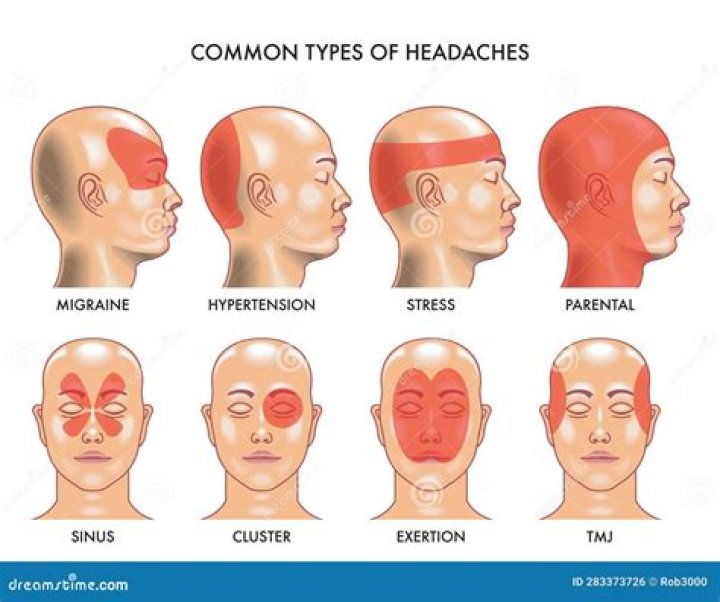
It is presenting mostly as a whole-head, severe-pressure pain. It's different than migraine, which by definition is unilateral throbbing with sensitivity to light or sound, or nausea. COVID headaches present more as a whole-head pressure.
Can a lingering headache be a symptom of COVID-19?
While loss of taste and smell are among the most publicized symptoms of COVID-19, headaches are also among the early symptoms. Often, those headache effects can linger.What are some of the first symptoms of COVID-19?
Early symptoms reported by some people include fatigue, headache, sore throat or fever. Others experience a loss of smell or taste. COVID-19 can cause symptoms that are mild at first, but then become more intense over five to seven days, with worsening cough and shortness of breath.How long should a headache last after being sick with COVID-19?
COVID-19 headaches typically last for a few days, although the duration depends on your age, immune system, and overall health condition. In mild cases of COVID-19, headaches will usually resolve within a few days. However, in more severe cases, mild or moderate headaches may come and go for up to 90 days.
How long do lingering symptoms last after COVID-19?
Symptoms. People with post-COVID conditions (or long COVID) may experience many symptoms. People with post-COVID conditions can have a wide range of symptoms that can last more than four weeks or even months after infection. Sometimes the symptoms can even go away or come back again.
How long could the COVID-19 virus linger in your body?
But for most infected people, virus levels in the body peak between three and six days after the original infection, and the immune system clears the pathogen within 10 days. The virus shed after this period is generally not infectious.When do symptoms of the coronavirus disease typically start?
People with COVID-19 have had a wide range of symptoms reported – ranging from mild symptoms to severe illness. Symptoms may appear 2-14 days after exposure to the virus.What do I do if I have mild symptoms of COVID-19?
If you have milder symptoms like a fever, shortness of breath, or coughing: Stay home unless you need medical care. If you do need to go in, call your doctor or hospital first for guidance. Tell your doctor about your illness.Can I have COVID-19 if I have fever?
If you have a fever, cough or other symptoms, you might have COVID-19.What type of headache does COVID-19 cause, and how does it compare to migraine?
In some patients, the severe headache of COVID-19 only lasts a few days, while in others, it can last up to months. It is presenting mostly as a whole-head, severe-pressure pain. It's different than migraine, which by definition is unilateral throbbing with sensitivity to light or sound, or nausea.Can I stay at home to recover if I have only mild symptoms of COVID-19?
Most people with COVID-19 have mild illness and can recover at home without medical care. Do not leave your home, except to get medical care. Do not visit public areas.Can mild cases of COVID-19 cause long COVID-19?
Advancing public health But even a mild SARS-CoV-2 infection can cause long COVID. And with the high transmissibility of the Omicron variant—which often results in milder disease outcomes—many patients may be concerned about developing long COVID.
Should you take cold medications if you have COVID-19 without symptoms?
If you have COVID-19 but don't have symptoms, don't take cold medications, acetaminophen (Tylenol), or over-the-counter nonsteroidal anti-inflammatory drugs (NSAIDs) such as ibuprofen (Advil®) and naproxen (Aleve®). These medications may hide the symptoms of COVID-19.
When should you take a COVID-19 test after exposure?
YES: Get tested at least 5 days after exposure. Follow quarantine guidance while waiting to test.
Are you still contagious 10 days after the first day of COVID-19 symptoms?
So, there is potential for people to be infectious beyond their seven-day isolation if they are still symptomatic. After ten days, most people are not infectious. Multiple studies have shown there is very little, if any, transmission after day ten, regardless of the variant.Is someone with COVID-19 still contagious after recovering?
The results, the team said, may indicate that a large number of people with COVID-19 are still likely contagious after the first five days of their illness, even if they feel fully recovered.Are recovered persons with persistent positive test of COVID-19 infectious to others?
Persons who have tested persistently or recurrently positive for SARS-CoV-2 RNA have, in some cases, had their signs and symptoms of COVID-19 improve. When viral isolation in tissue culture has been attempted in such persons in South Korea and the United States, live virus has not been isolated. There is no evidence to date that clinically recovered persons with persistent or recurrent detection of viral RNA have transmitted SARS-CoV-2 to others.
Despite these observations, it’s not possible to conclude that all persons with persistent or recurrent detection of SARS-CoV-2 RNA are no longer infectious. There is no firm evidence that the antibodies that develop in response to SARS-CoV-2 infection are protective. If these antibodies are protective, it’s not known what antibody levels are needed to protect against reinfection.
Is it normal for COVID-19 symptoms to last more than 10 days?
People with post-COVID conditions can have a wide range of symptoms that can last more than four weeks or even months after infection. Sometimes the symptoms can even go away or come back again.
How long do body aches and muscle pains last from COVID-19?
Body aches or muscle pains may be an early symptom of COVID-19, often appearing at the very start of the illness and lasting for an average of 2-3 days. Unfortunately, COVID-19 body aches can sometimes last much longer and are commonly reported in people with long COVID-19 or post COVID-19 syndrome.
What are some of the potential long-term effects of COVID-19?
Known as post-acute sequelae of SARS-CoV-2 infection (PASC), or more commonly as Long COVID, these conditions affect all ages. Long-term effects include fatigue, shortness of breath, difficulty concentrating, sleep disorders, fevers, anxiety and depression.
How many times can I get COVID-19?
'A long-term pattern' According to some infectious disease researchers, Covid-19 reinfections are likely to become more common as time goes on and different variants continue to circulate—with some people potentially seeing third or fourth reinfections within a year.Do mild cases of COVID-19 cause scars on the lungs?
“The first is the severity of the coronavirus infection itself — whether the person has a mild case, or a severe one,” Galiatsatos says. Milder cases are less likely to cause lasting scars in the lung tissue.
